
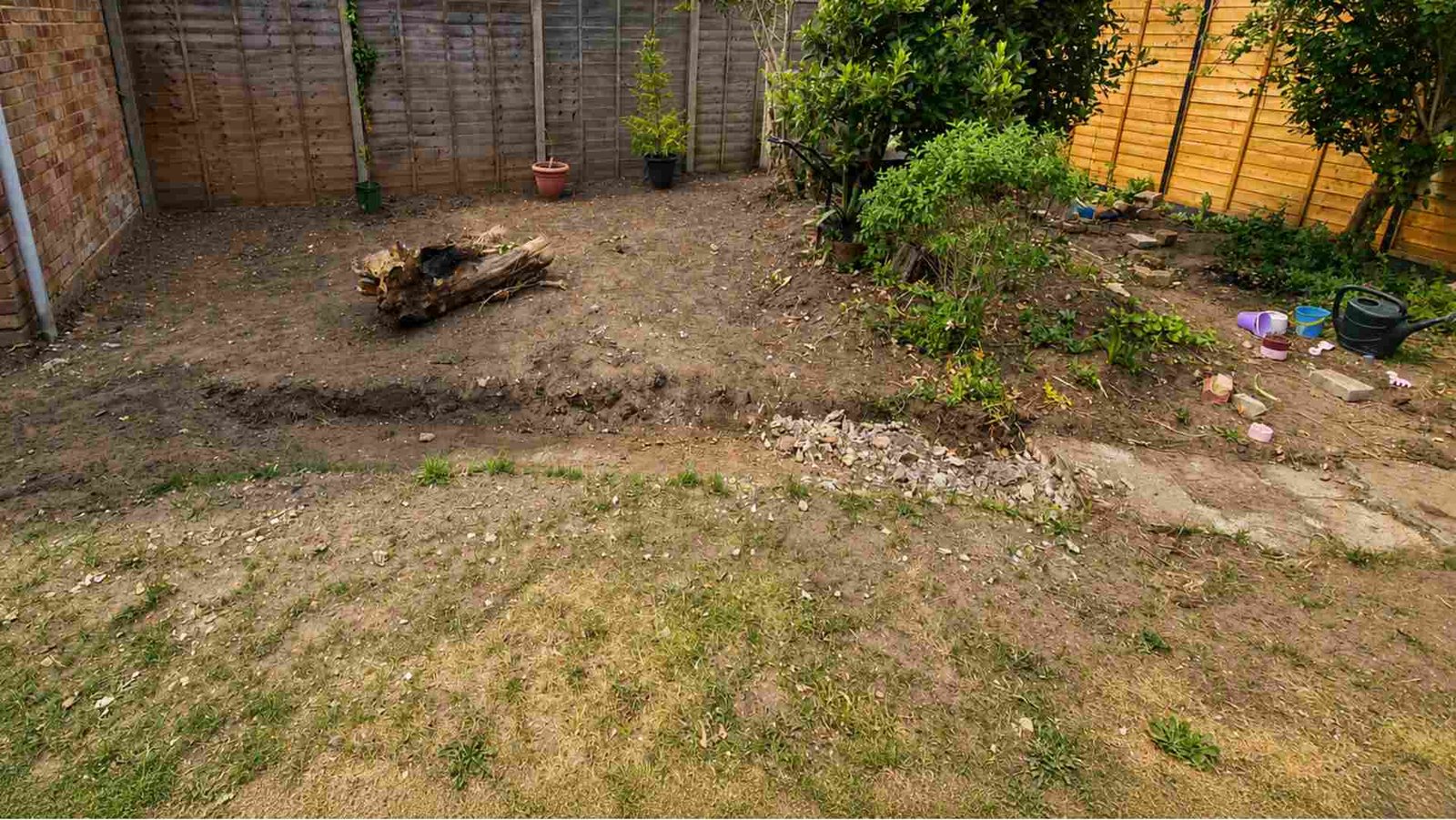
At the end of our garden clearance project, we were left with something we hadn’t seen since moving into the house.
Space.
The overgrown borders had been cut back. Hidden structures had been removed. Years of accumulated debris had finally been cleared away.
For the first time, we could stand at the house and see the entire garden.
It was exciting.
It was also daunting.
The hard work of uncovering the garden was behind us.
Now came the challenge of turning that empty space into somewhere our family could truly enjoy.
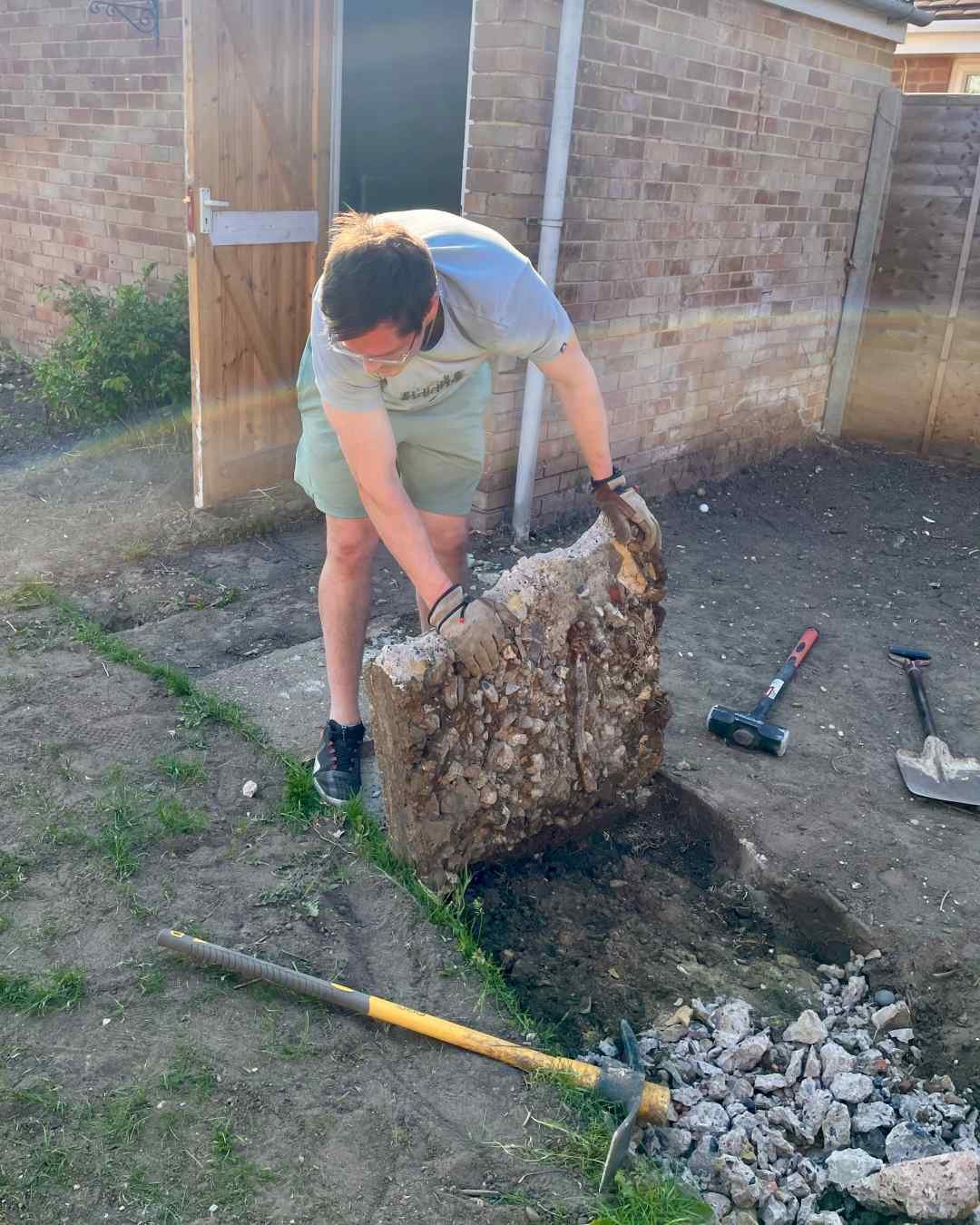
Removing the Old Pathway by Hand
The old pathway that once wrapped around the garden wasn't removed by machinery. Piece by piece, it was broken up and lifted by hand.
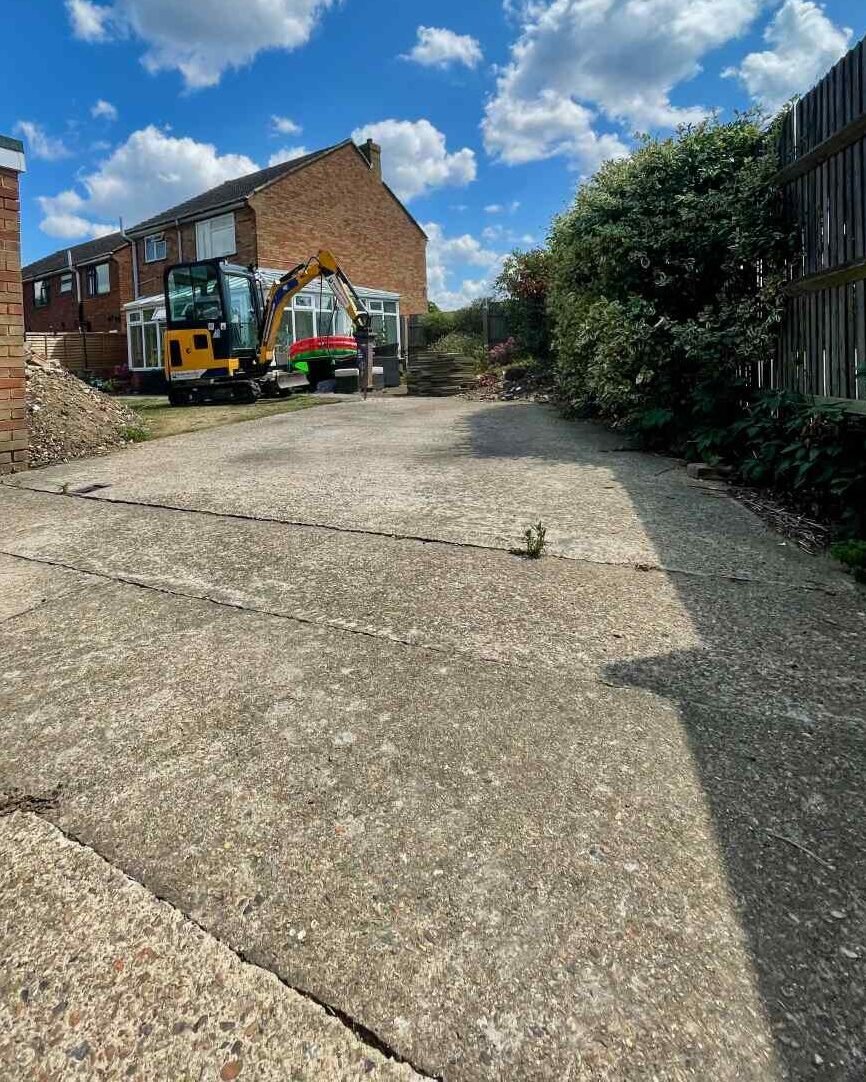
The Driveway That Dominated the Garden
The rear driveway occupied a surprising amount of the garden. Removing it would transform how the space could be used.
Removing the Past
The garden still carried the footprint of how it had once been used.
A concrete pathway ran from the side of the house, around the garage and into the rear garden. Beyond it sat an old concrete driveway that occupied a surprising amount of space.
If we wanted a lawn, those features had to go.
Armed with little more than a pickaxe, determination and an extraordinary amount of persistence, Superman began breaking apart the old pathway by hand.
What followed was weeks of relentless work.
Concrete was lifted piece by piece. Rubble was moved one wheelbarrow at a time. Every section removed revealed a little more of the garden that had been hidden beneath.
Progress often felt slow, but with every load taken away, the vision became a little clearer.
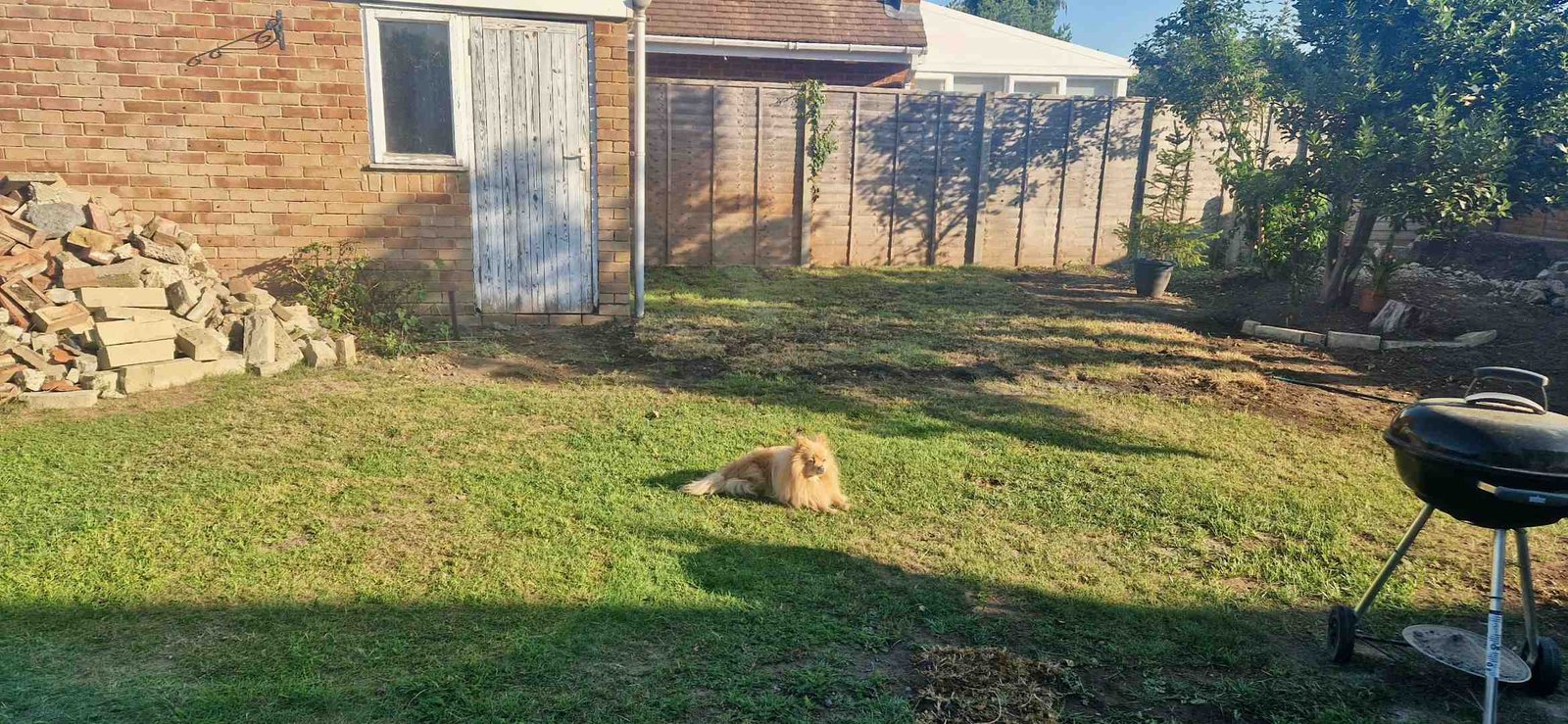
Seeing Possibility
One of the most rewarding moments came before any turf was laid.
For the first time, we could stand at the house and look across the entire garden without interruption.
It wasn’t just the size of the space that surprised us.
It was how different it felt.
The boundaries suddenly seemed further away, the mature trees had room to breathe and the garden felt far larger than we’d imagined.
After months of clearing and excavation, it was finally possible to picture what the space might become.
Children running across the lawn.
Summer evenings outdoors.
Borders filled with flowers.
The garden wasn’t finished.
But for the first time, it felt full of possibility.
Opening Up the Garden
Once the pathway had gone, attention turned to the old rear driveway.
This was a different challenge altogether.
The same digger we had hired for the front driveway project was brought round to the back, where years of concrete were finally broken up and removed.
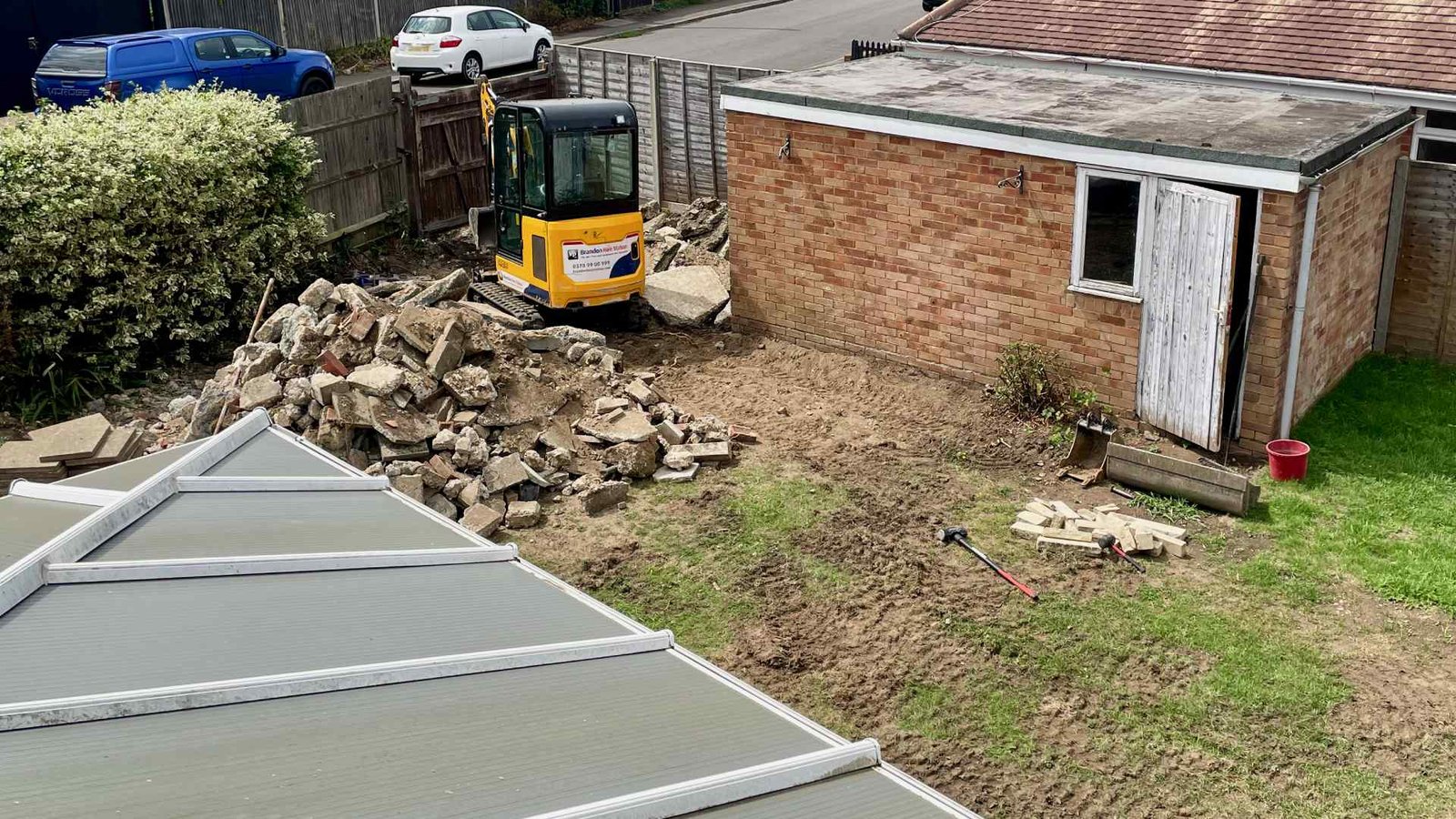
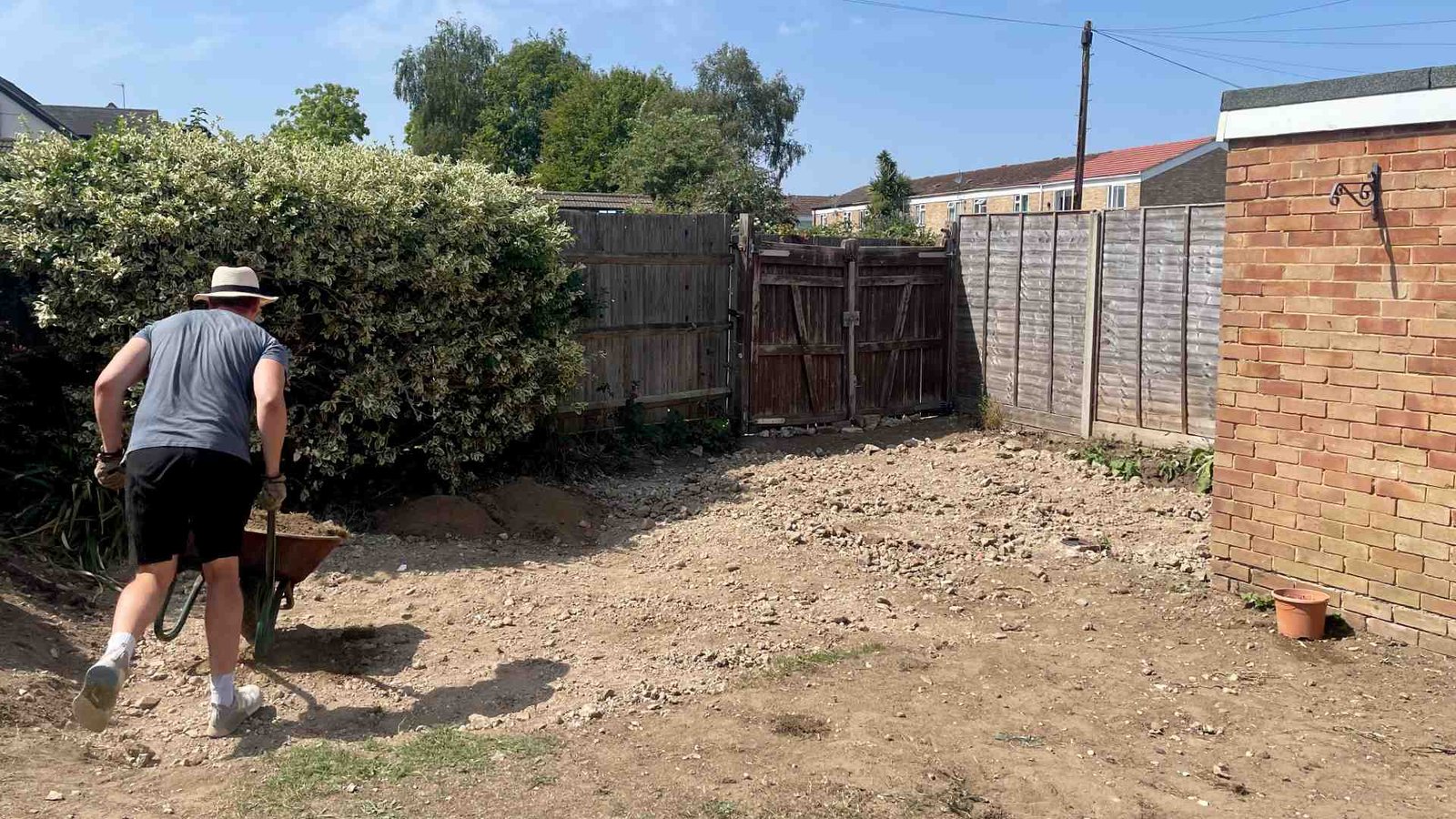
The change was immediate.
Areas that had once felt closed in suddenly opened up, revealing far more garden than we’d realised we had.
Looking back, removing the driveway may have been one of the most important decisions we made.
Not because of what disappeared.
But because of everything it made possible.
The Compost Heap and the Tree Stump
A substantial tree stump sat nearby, stubbornly holding its ground.
It resisted digging.
It resisted cutting.
In the end, a combination of chopping, persistence and a carefully controlled burn finally removed what remained.
Only then did it feel as though the garden was truly ready for its next chapter.
“Before we could create the garden we wanted, we had to let go of the one that was already there.”
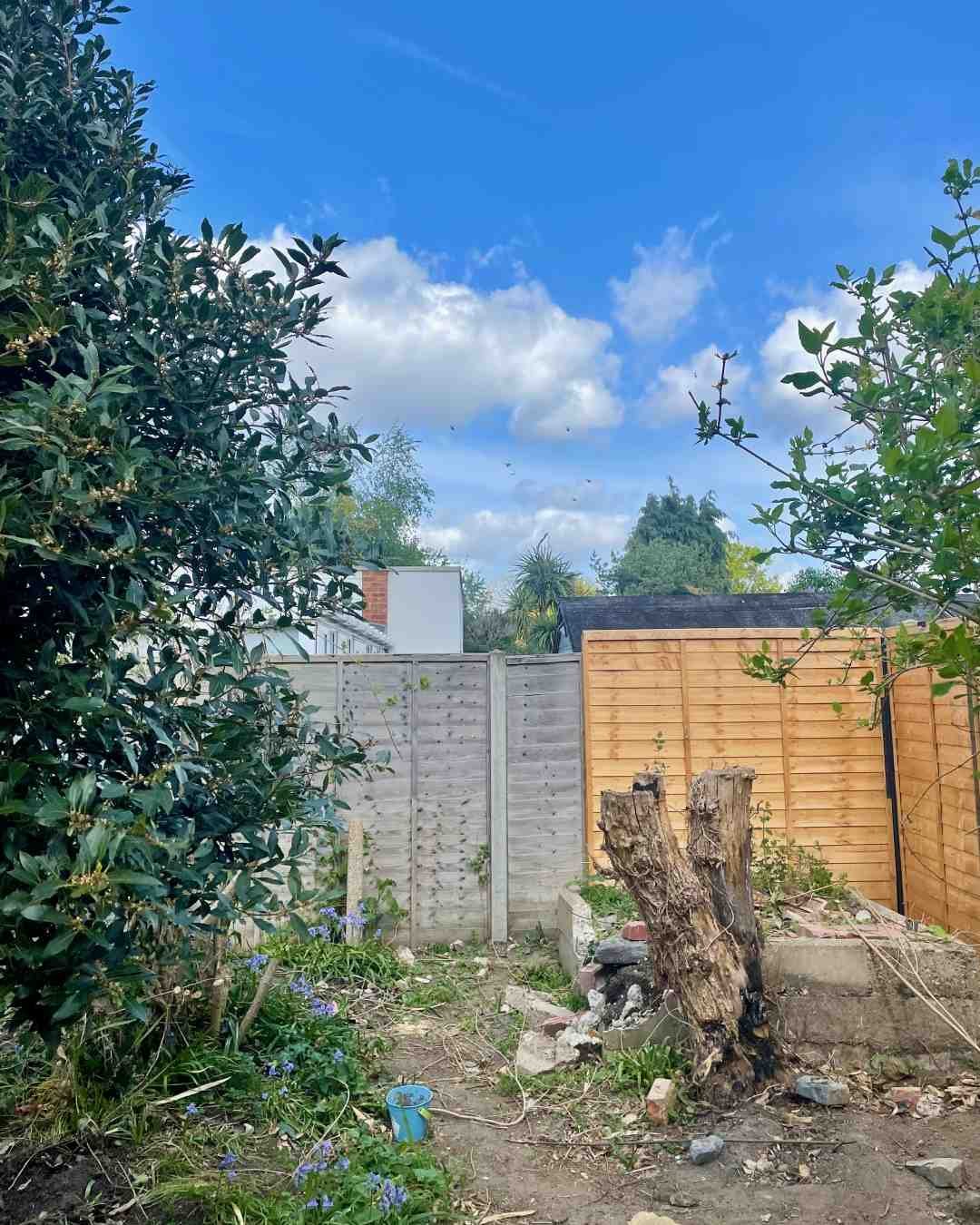
The Forgotten Corner
Before the excavation began, this neglected corner hid an old raised bed, a large tree stump and years of overgrown planting.
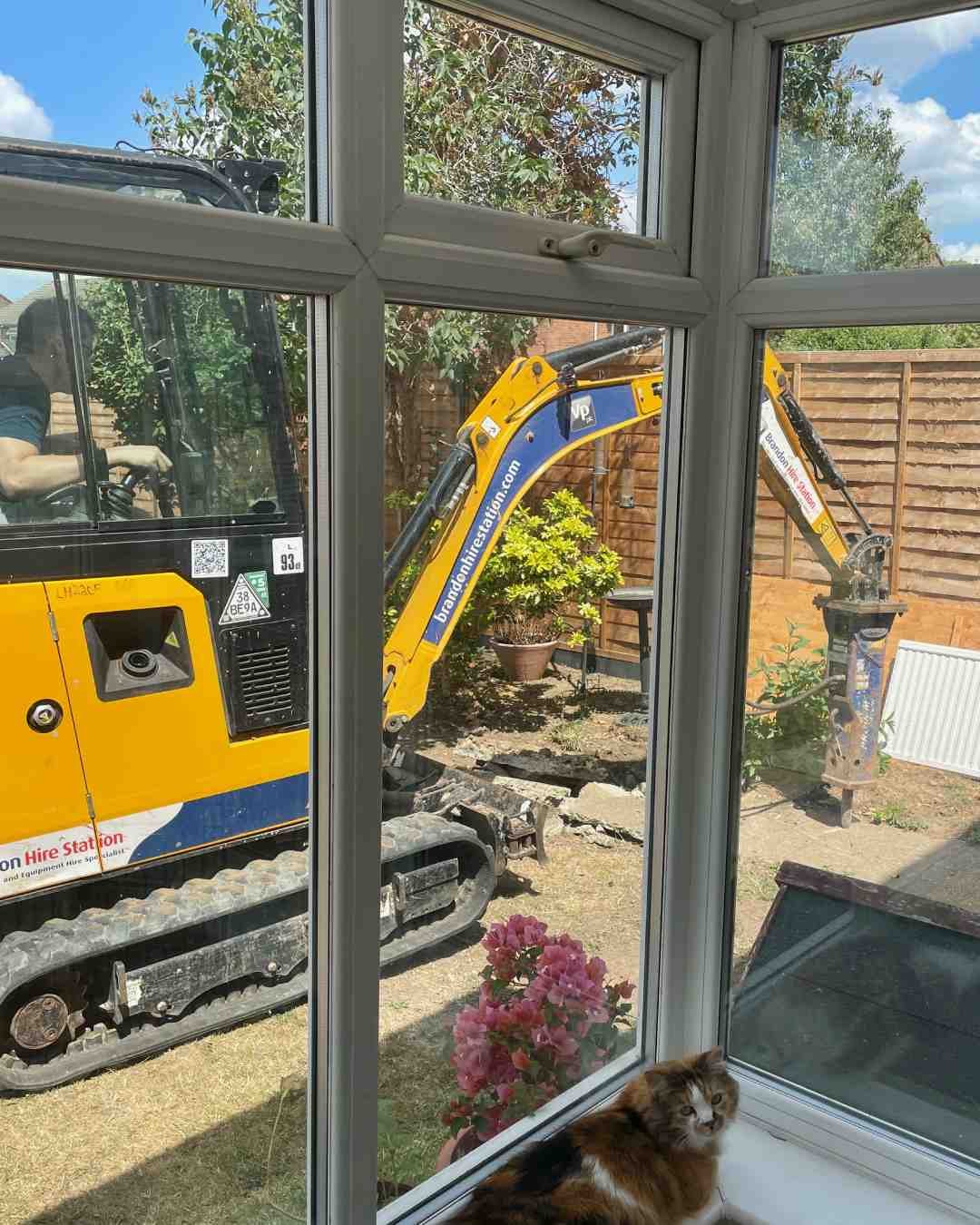
The Heavy Machinery Arrives
Watching the excavator break through years of old concrete from the safety of the conservatory. It was loud, dusty and incredibly satisfying.
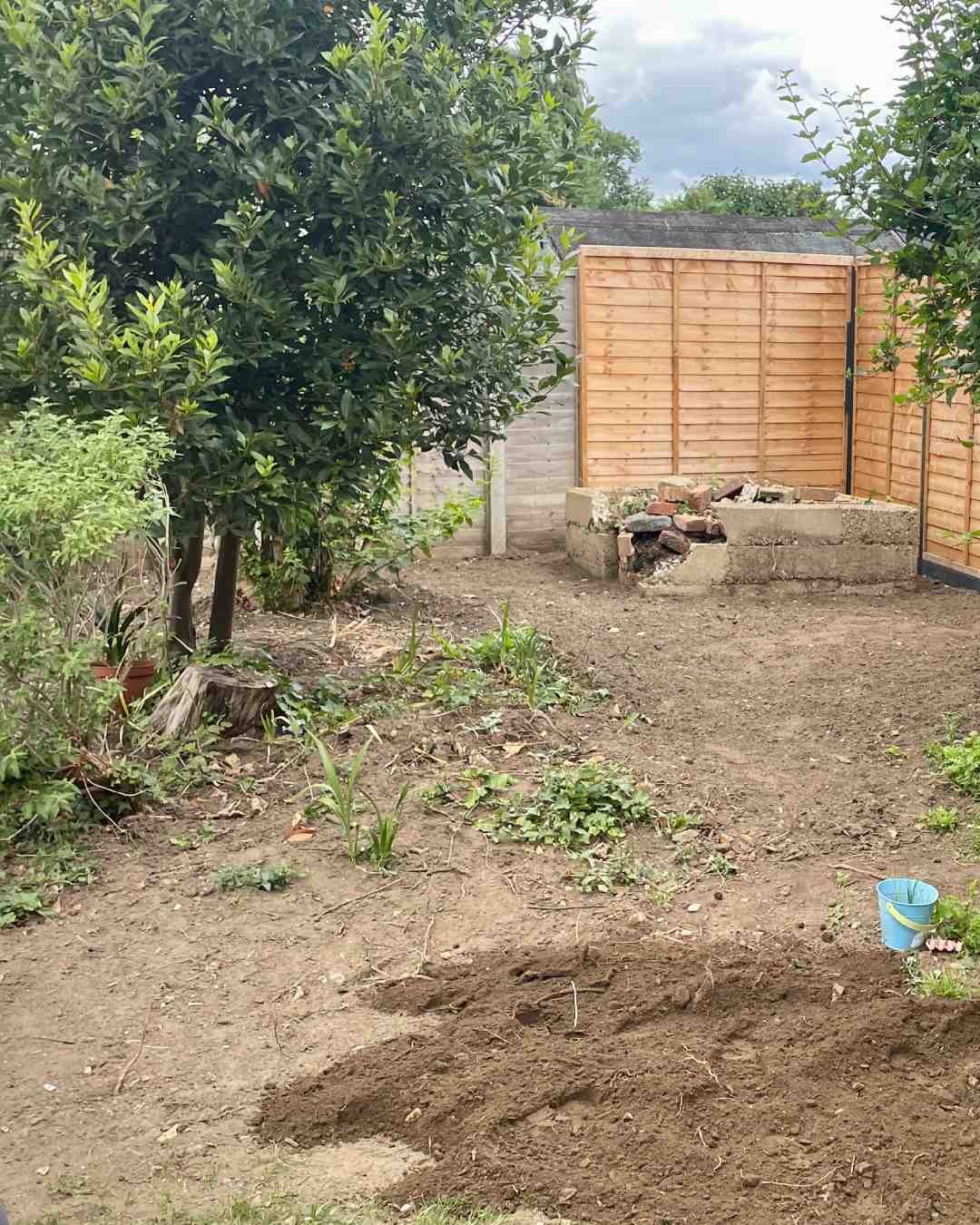
A Blank Canvas
With the old paths removed and the space cleared, the garden was finally ready to be reshaped into something we could enjoy.
Preparing the Ground
It’s tempting to think that laying a lawn begins with turf.
In reality, it begins long before the first roll arrives.
By this point it was the end of summer. We’d spent weeks living with bare earth, muddy paddling pools after every splash session and clouds of dust whenever the wind picked up. The demolition was behind us, but the garden still wasn’t somewhere we could properly enjoy.
The excavator had torn up what remained of the original grass, leaving us with a clean slate. We weren’t aiming for a perfectly level show lawn. We were tired, and after months of heavy work we simply wanted a garden the family could use without bringing half of it back into the house.
We’d originally hoped to reuse some of the turf removed during our front driveway project, but after discovering it contained invasive yarrow, we decided not to risk introducing it into the new lawn. Instead, it was all removed and disposed of, giving us a fresh start.
The ground was levelled, the obvious stones and debris removed, and we concentrated on creating a solid base rather than chasing perfection.
It wasn’t perfect.
But after a summer of dust, demolition and disruption, it was ready for the next chapter.
Laying the Turf
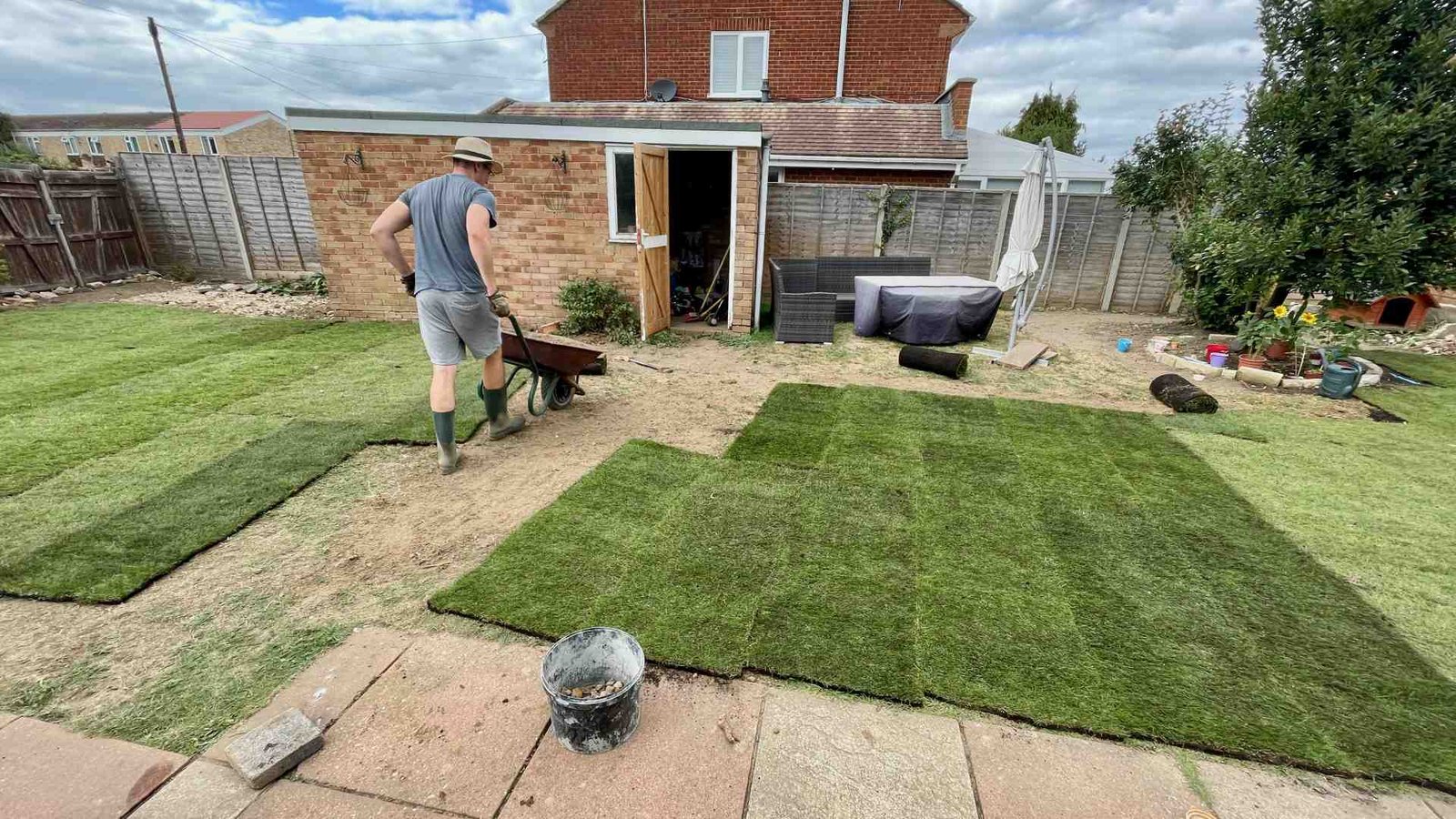
By late August 2025, we were finally ready.
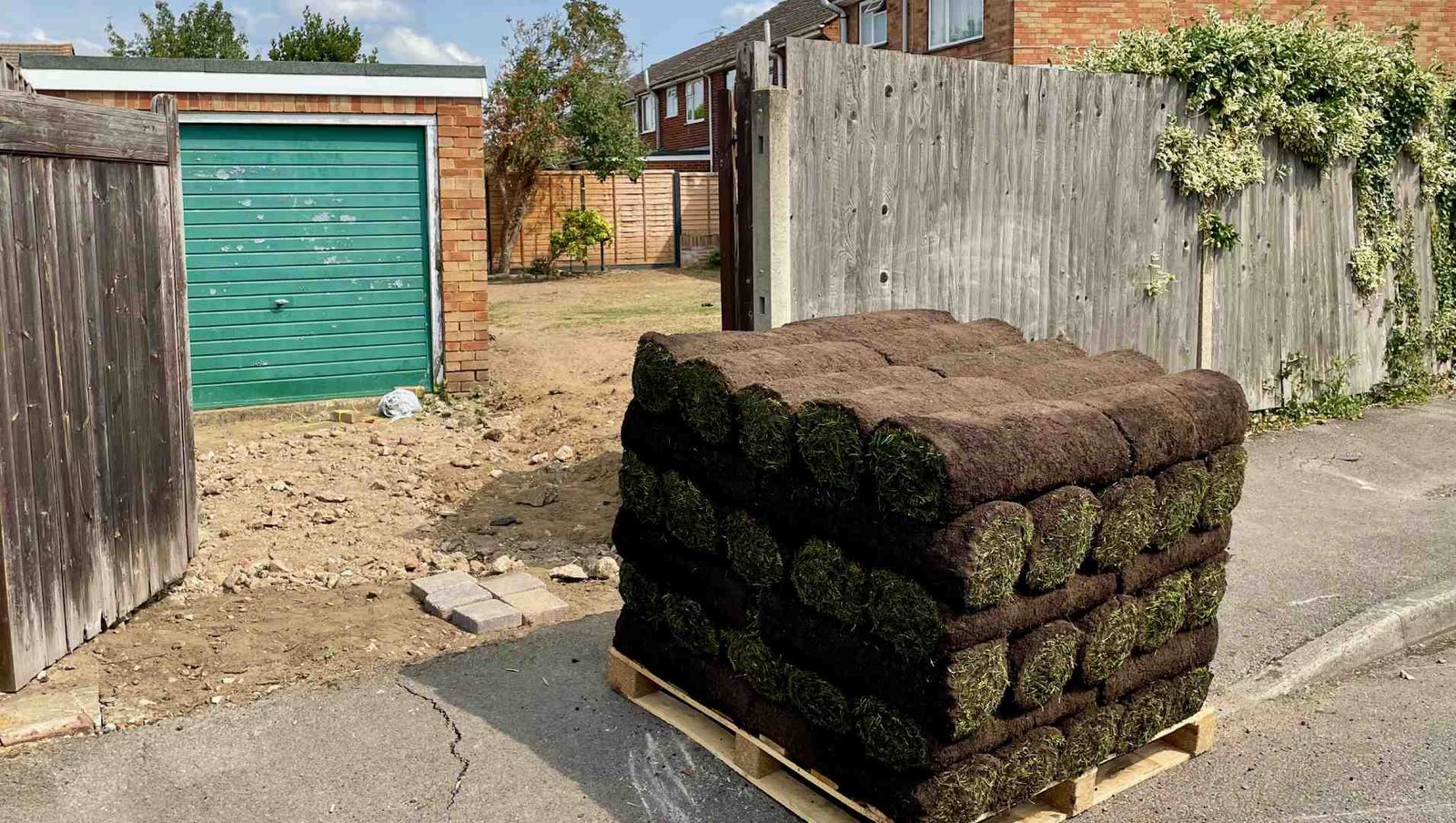
Seeing the pallet of fresh turf arrive felt like a genuine milestone. After weeks of demolition, clearing and preparation, the transformation suddenly accelerated.
What had been bare earth the day before quickly began to resemble a garden.
Roll by roll, the lawn took shape. We chose turf because we wanted the instant impact. Superman would still tell you that growing a lawn from seed is easier than most people think, but after enduring a summer of dust, mud and disruption, we were more than ready to see some green.
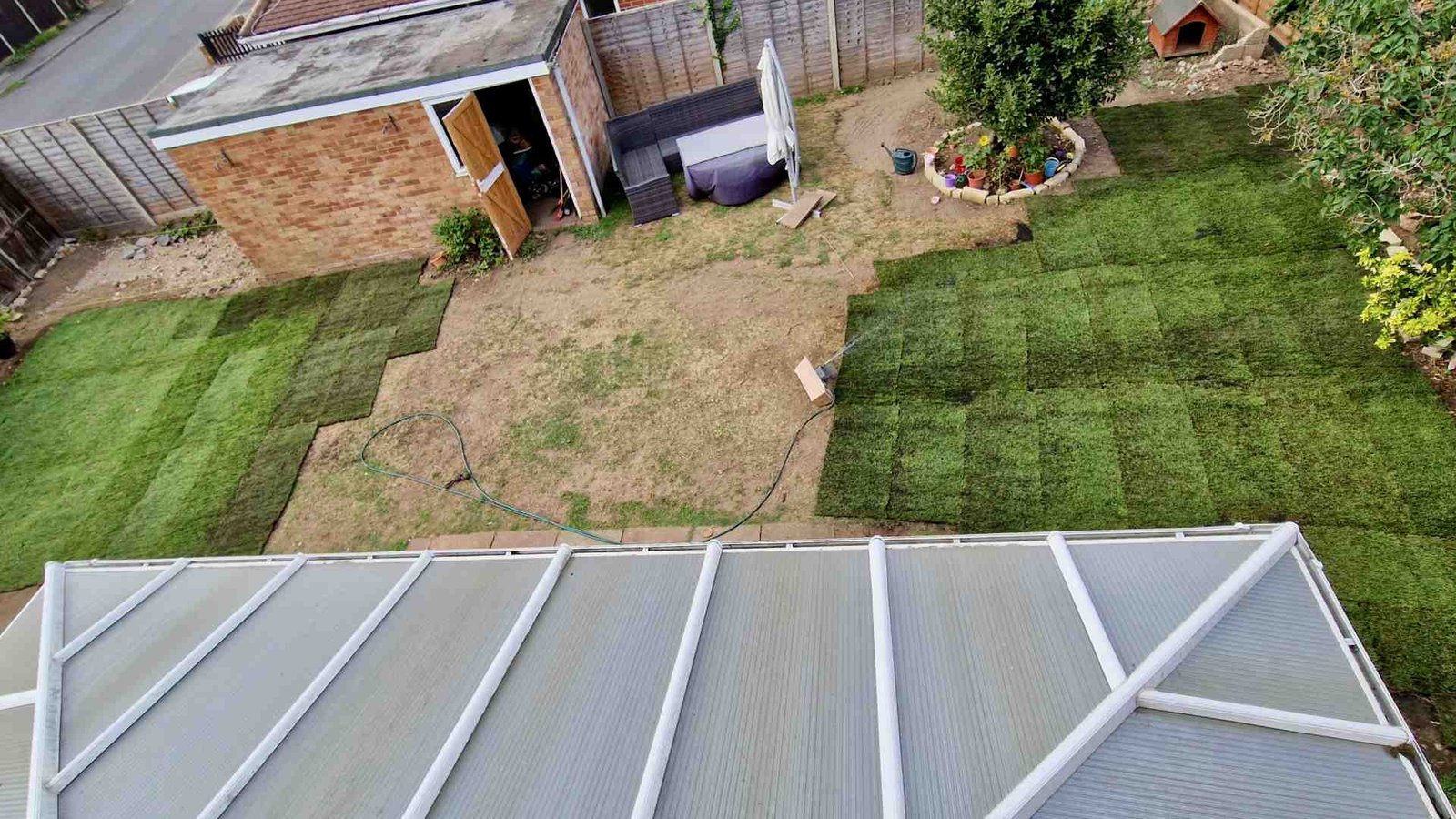
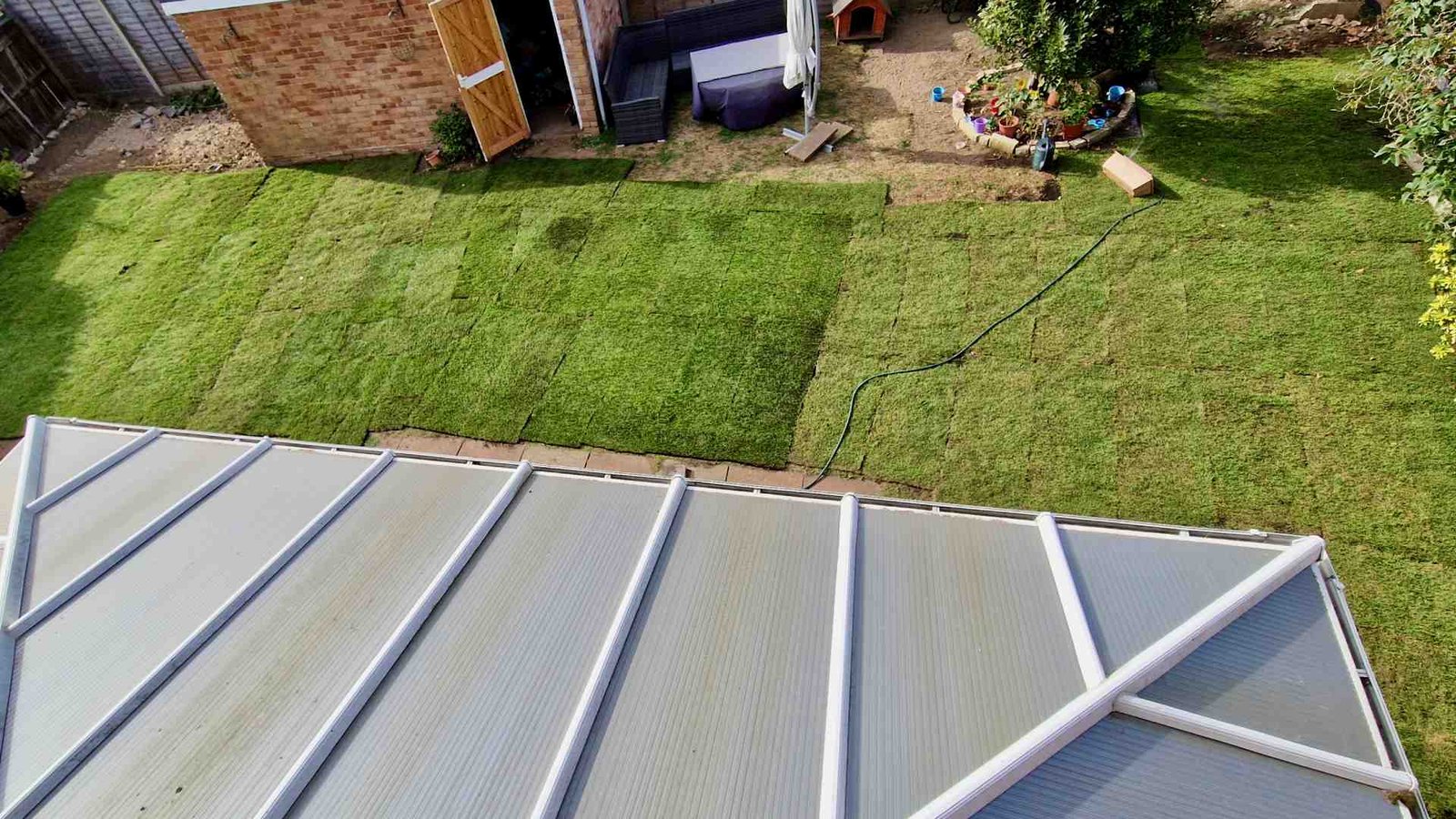
The healthiest offcuts were carefully saved. Once the new lawn was complete, those spare pieces were used to patch the remaining bare areas left behind by our front driveway project, ensuring nothing went to waste.
The visual impact was immediate.
For the first time since moving in, there was a sense that the project was becoming something more than demolition and wheelbarrow loads.
The garden was finally beginning to feel like home.
Turf day wasn’t the end of the project.
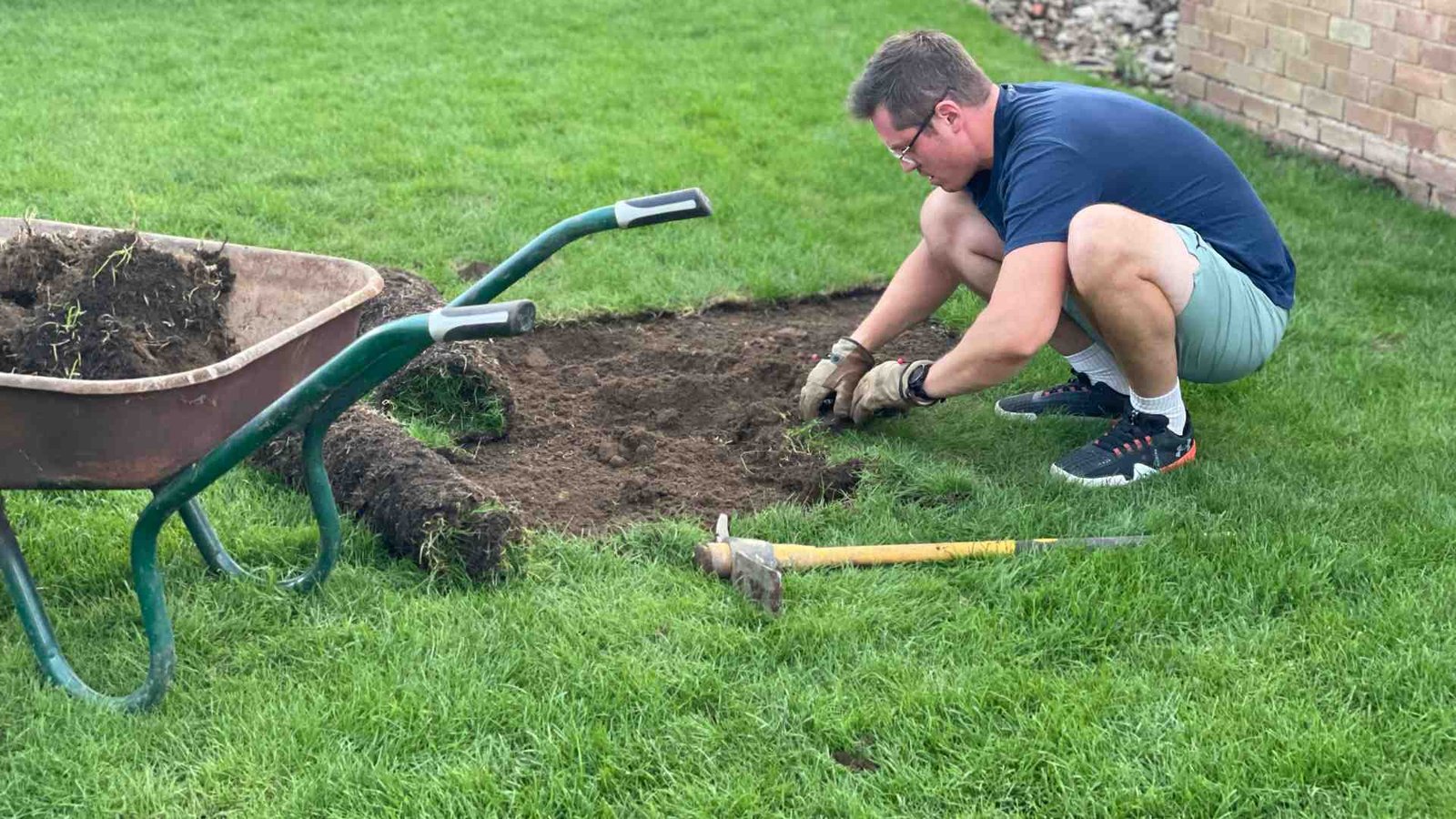
Once the lawn had settled, Superman returned to lift sections of turf where old grass had been trapped beneath and to make small adjustments to the levels.
These weren’t dramatic changes, but they mattered. Taking the time to correct those areas early would help the lawn establish more evenly over the weeks that followed.
Like most renovation projects, the finished result wasn’t achieved in a single day.
It came from returning, improving and paying attention to the details.
What It Was Really About
As the lawn settled, something else happened.
The garden quietly became part of our daily life.
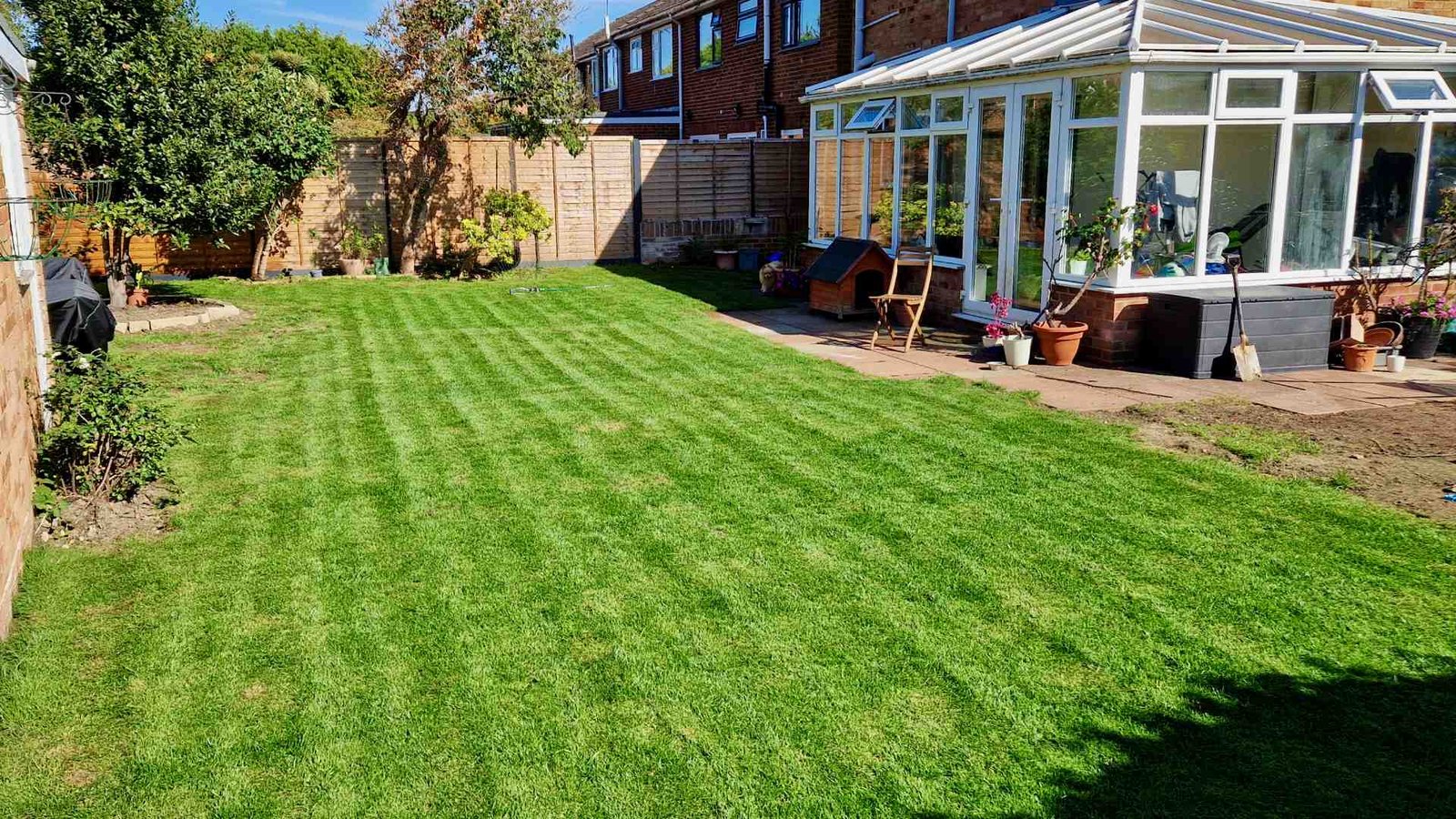
The children had somewhere to kick a football, run through the sprinkler and set up the paddling pool without ending up knee deep in mud. Summer evenings naturally moved outdoors, and the garden quickly became the backdrop to ordinary family life.
Looking back, that was always the real goal.
The lawn was never about having perfect stripes or a flawless finish.
It was about creating a space our family could actually use.
There was still work to do.
Borders would be replanted, trees would find new homes and the planting would continue to evolve over the years ahead.
Fine Tuning the Finish
Even after the lawn was down, there were still finishing touches. Small adjustments like removing old grass beneath the turf and levelling uneven areas made all the difference to the finished result.
But laying the lawn marked an important turning point.
For the first time since moving in, the garden felt less like an endless renovation project and more like home.
It wasn’t the end of the journey.
It was the foundation for everything that came next.
Reporting from the dust,
xo Lois